
Stationary cups
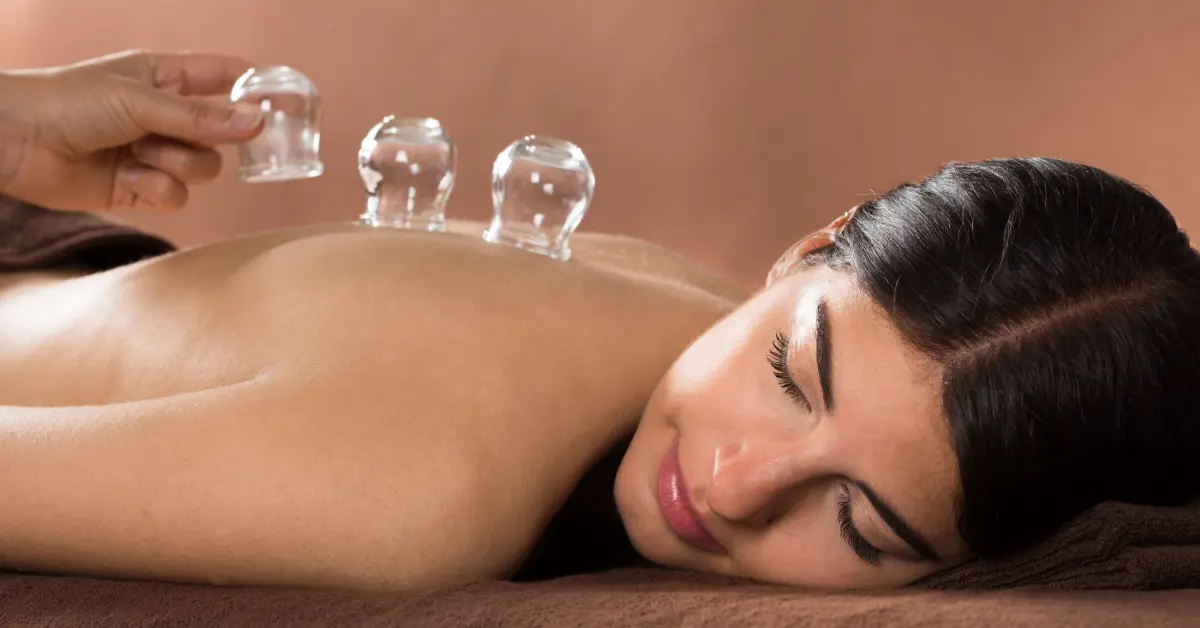
One or several cups stay in place over a tight area for five to fifteen minutes, holding the tissue lifted the whole time while the muscle underneath is left alone.
Myofascial cupping lifts the tissue instead of pressing into it, a different route to relief. Our therapists on St. Albert Trail in north Edmonton usually add it to a longer session.
$115.50 / 60 Minutes (+GST)
When pressing harder stops working
Some tightness sits in the same place session after session, in a shoulder, the side of the neck or across the low back, and firm pressure only seems to reach it for a day before the stiffness and the lost mobility come back.
When tissue has been held in one position for months, at a desk or through the same training movement, the layers stop sliding over each other the way they should.
You’ve seen the round marks on athletes’ backs and wondered whether they hurt, or whether they’re safe. They’re common and they fade, and your registered massage therapist here on St. Albert Trail will tell you plainly whether cupping suits you before a single cup goes on.
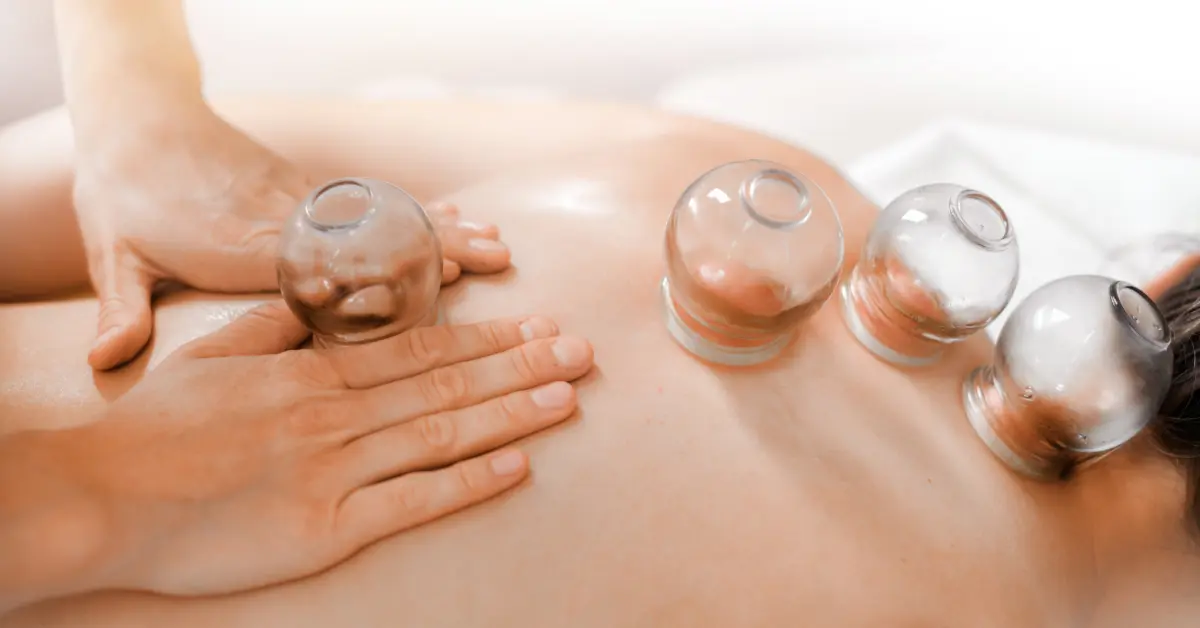
Myofascial cupping uses silicone cups to create a gentle vacuum that lifts the skin, fascia and soft tissue away from the muscle underneath. With massage your therapist presses into the tissue, and with cupping the suction pulls it up. Afterwards it tends to feel as if you’ve had a deep tissue massage.
One or several cups stay in place over a tight area for five to fifteen minutes, holding the tissue lifted the whole time while the muscle underneath is left alone.
With a little oil on the skin, your therapist moves the cups slowly along the muscle and the fascia around it, so the lift travels instead of staying in one spot. This is how cupping is used for myofascial release.
Most people book a cupping massage, with hands-on work before and after the cups.
Cupping is a traditional technique with roots in Chinese medicine, and here it has one job, lifting tight tissue so your therapist has a second way into it.
Myofascial cupping is used on muscles that feel tight or stuck, most often in the neck, shoulders and low back, and on areas that have lost some movement after training. It sits inside the session alongside hands-on work, and it isn't offered as a treatment for any medical condition.
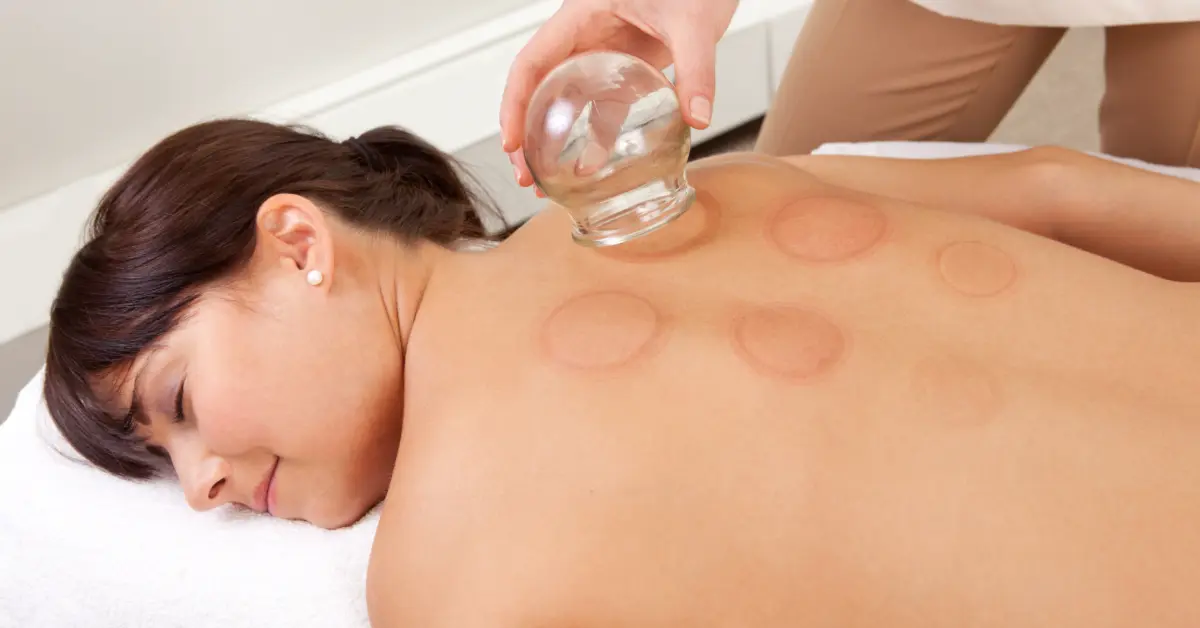
The round marks are the part of cupping everyone notices, and they’re a normal sign of where the cups sat.
Depending on how much suction was used and how tight the tissue underneath was, the marks range from a faint yellow to a deep purple. They look like round bruises, and they’re usually less tender than they look. A spot that marks lightly one visit sometimes marks darker the next, for those same two reasons, so tell your therapist if you’d rather keep the marks light and they’ll ease the suction.
Most fade within a few days to a week, so if you have a wedding or another special event coming up, tell your therapist, and they’ll keep the cups away from anywhere that will show or leave them out this time.
A few things help the area settle:
One question comes up often enough to have its own post: can cupping reduce inflammation?
Thirty, sixty and ninety minutes all book online, and you can pick a therapist by name or select all of them to see every opening the clinic has that week.
Pressure and focus start from what you tell us rather than a routine, and your therapist says what they are finding while they work. You hear it as it happens.
Before you leave, we can put your next appointment on the calendar, and our own booking page will tell you the current week may already be full.
Come a few minutes early your first time, because there is a short health history to fill out, and filling it in the waiting room spends the hour you booked on paperwork instead of treatment on the table.
You know what the hour will involve, what it costs, and when you are coming back.
great experience at Got Knot massage therapy. They offer a lot of different services, Massage therapy Pre/postnatal natal massages, deep tissue massage Sports massaging, cupping, Myofascial cupping. I had a deep tissue massage feel great highly recommended. Located on st.Albert…
This was my first time at Got Knots. I have been searching for therapist sinc my usual RMT has been out of commission. Nadine was wonderful. She listened to my concerns. She asked what has worked…
Felt ten years younger
the best that I have ever had
they are all great
The best at what she does
Most importantly they listen to my massage needs
Experts at finding knots
found muscles I didn’t even know existed
Super easy direct billing
the therapy I receive here is second to none
Clinic-wide membership with the Natural Health Practitioners of Canada means the receipt you hand your insurer is the same document whichever therapist you book, and the hour you get is held to the same standard.
It is a discount you buy once and spend as the sessions come, instead of a monthly fee you have to remember to cancel.
Eleven years with no lapse and no downgrade, on a rating anyone can check.
Most people book 60 minutes, which is $115.50 plus GST. Cupping is booked as massage time at the same rates as any massage, so the cost depends on the length you choose. Thirty minutes suits one area with the cups alone, and an hour leaves room for hands-on work around them.
| Session | Price |
|---|---|
| 30 minutes | $73.50 |
| 60 minutes | $115.50 |
| 90 minutes | $157.50 |
We bill your extended health provider directly, so you only pay the part your plan doesn't cover, and the card we keep on file isn't charged until your insurer has paid its share. We can bill your primary plan only. If your plan needs a doctor's referral for massage, send it to your benefit provider before your appointment, not to us.
Alberta Blue Cross – Sun Life – Canada Life – Telus Health (Manulife, Canada Life + 20 more) – Medavie (incl. Veterans Affairs & RCMP) – Green Shield
Nadine Munro has been a Registered Massage Therapist since 2000 and founded Got Knots in 2009. Every therapist on our team is an RMT with at least 2,200 hours of training, and together we've treated more than 4,300 clients since the clinic opened.

FocusDeep tissue, cupping and children's massage
Usually not, though most people feel a strong pull as the cup lifts the tissue. It’s more strange than painful, and the feeling tends to settle within a minute or two as the tissue gets used to being held, and your therapist will lower the suction straight away if you ask.
Yes, it helps loosen the tight tissue around a knot, which often makes the knot itself easier to work. For the knot itself, trigger point therapy holds steady pressure on the point until it releases, and many sessions use both.
Cupping isn’t right for you if you take blood thinners or have a bleeding disorder. It’s never used over thin or broken skin, a wound or a fresh injury. Tell your therapist about any medication or health condition before the cups go on, and they’ll decide with you whether to use them.
Neither one wins, because at Got Knots they usually happen together. Your therapist presses into the muscle with their hands where pressure works and switches to the cups where the tissue needs lifting instead, so one appointment gives you both approaches without choosing between them.
No, we offer dry myofascial cupping only, with silicone cups and suction. Wet cupping, sometimes called hijama, involves drawing blood, and Got Knots doesn’t do it.
Usually, yes. Plans that cover massage by a registered massage therapist cover myofascial cupping therapy too, because it’s booked as a massage appointment. We handle direct billing wherever your plan allows it, so call 780-455-7160 if you aren’t sure what yours covers.
Visit us
Find us at 13220 St Albert Trail NW #104 — right on the commute between downtown Edmonton and St. Albert. Open Monday through Saturday, with direct billing to most major benefit plans.
Serving north Edmonton and the St. Albert corridor